
Easy Perfect Mahi Mahi Recipe
- By Amy Dong
- Updated Aug. 6, 2026
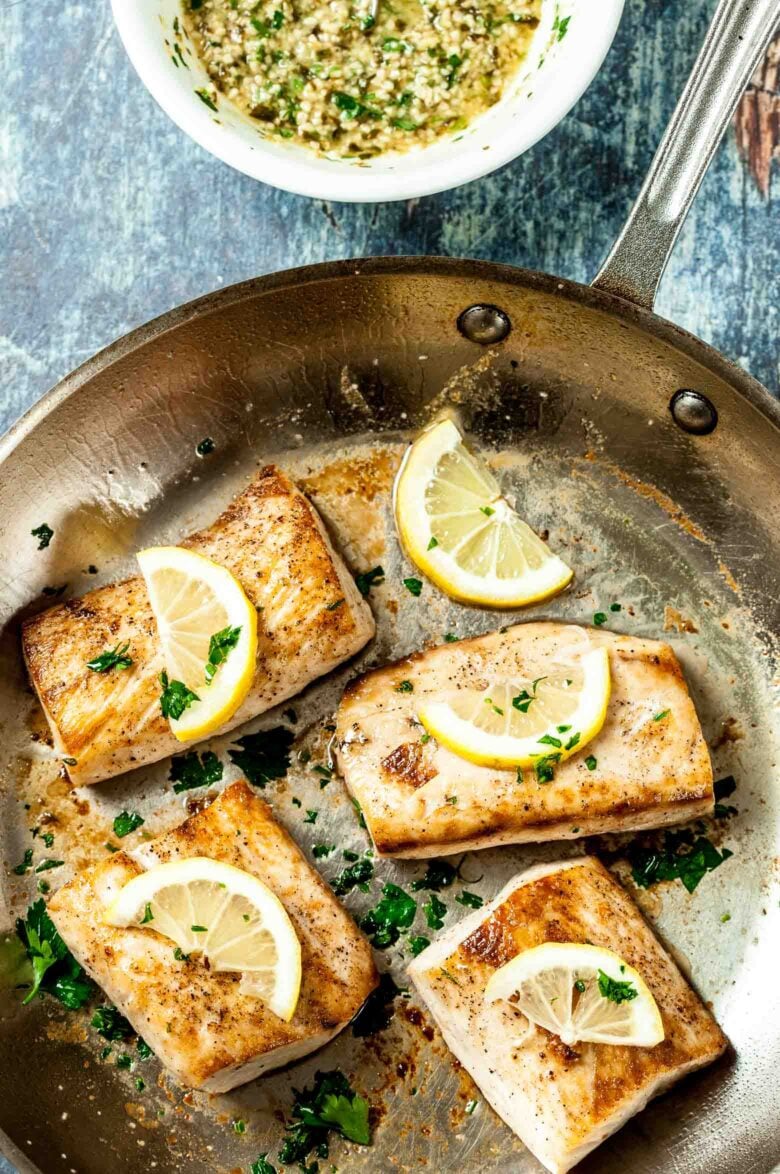
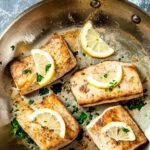
This 30-minute easy Mahi Mahi recipe has been one of the most popular recipes on my site since I posted it. It’s my fail-proof method to reliably tender, flaky fish that tastes like it came from a restaurant. It includes a delicious lemon garlic butter sauce that you’ll want to use on all fish fillets. It’s easy, hugely flavorful, and is guaranteed to impress your family and friends.
In This Article
- Amy’s Notes
- What is Mahi Mahi?
- Is Mahi Mahi Healthy?
- Key Recipe Ingredients
- Substitutions and Variations
- Helpful Tips for the Best Mahi Mahi
- Step-by-Step Recipe Instructions
- How to Store Leftovers
- Watch Us Make This Recipe
- Easy Perfect Mahi Mahi Recipe Recipe
- What to Serve With Mahi Mahi?
- Frequently Asked Questions
- More to Cook and Eat
This post may contain affiliate links, at no additional cost to you.
Amy’s Notes

I grew up in a house where fish was on the dinner table at least 3 times per week. Whole fish, fillets, pan-fried, braised—you name it, my parents made it! But I know cooking fish at home can feel a little intimidating if you didn’t grow up with it. This mahi recipe is restaurant-quality, yet is super easy and quick. What you’ll love about this mahi fillet recipe:
Super Fast: Go from fridge to table in about 30 minutes. You don’t need to stand at a stove for hours to get restaurant-worthy fish on the table.
Tender and Flaky: This specific stovetop-to-oven method gives you a golden, seared crust with a melt-in-your-mouth center.
Huge Flavors: This warm lemon garlic butter sauce is so good, you’ll want to spoon it over all kinds of fish fillets. I use this sauce on all the seafood.
Healthy Dinner: This mahi recipe is great alongside our Instant Pot Brown Rice or Garlic Roasted Potatoes.
What is Mahi Mahi?
Mahi Mahi is the Hawaiian name for dolphinfish, Coryphaena hippurus, or dorado, though it is completely unrelated to dolphins. It was so named, as this fish tends to swim in a similar fashion to dolphins. Mahi Mahi is a surface dwelling fish that’s commonly found near the Gulf of Mexico, Costa Rica, Hawaii, and the Indian Ocean. Due its mild flavor and firm yet moist flesh, mahi mahi recipes are a popular fish to serve at restaurants around the world.
Is Mahi Mahi Healthy?
Yes, it is! Mahi mahi is a very lean protein that’s naturally low in fat and calories. It stands out from other white fish, as it’s an excellent source of Omega 3’s, Niacin, Vitamin B12, Phosphorus, and Selenium.
Key Recipe Ingredients
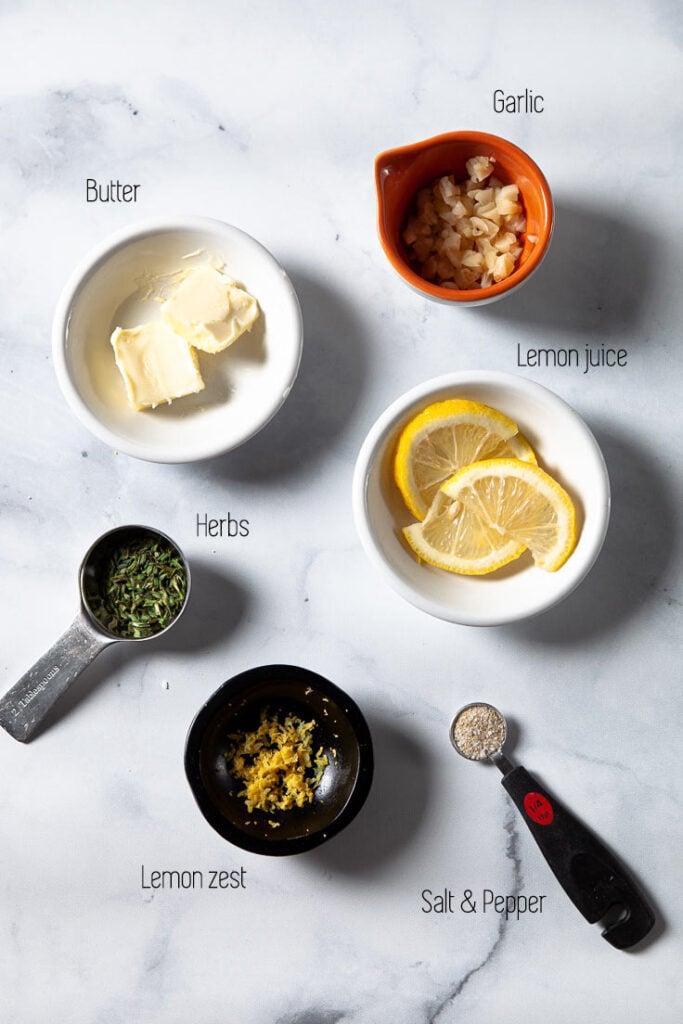
Mahi Mahi Fillets: Choose 1-inch thick fillets (about 4-6 oz each) for the best results. Thicker fillets will give you tenderness and even cooking.
Fresh Garlic & Lemon: Freshly minced garlic and real lemon juice/zest are non-negotiable here—bottled juice just won’t cut it.
Butter & Olive Oil: Pure butter for rich flavor in the sauce, and high-heat olive oil to get that gorgeous pan sear.
Fresh Herbs: Chopped parsley or chives bring that fresh finish right before serving.
Substitutions and Variations
Here are some of our favorite ways to change up this simple mahi mahi recipe.
- Fish Alternatives: Swordfish, cod, or barramundi fillets also work well with this exact method. Just be sure they are at least 1-inch thick.
- Herb Twist: Swap parsley for fresh dill, basil, oregano, or tarragon for a French twist.
- Spicy Kick: If you’re a fan of spice, add a pinch of red pepper flakes to the garlic butter for a little heat.
Helpful Tips for the Best Mahi Mahi
Here are some of our pro tips for cooking mahi mahi:
- Type of fish: Get either super fresh or quick-frozen, high-quality mahi mahi… wild is best and will provide the best flavor.
- Size of fillets: Be sure your mahi portions are about 6- 7 oz each, with at least 1-inch thickness. If your portions are thin or too small, they’ll tend to overcook, and the seasoning proportions will be off.
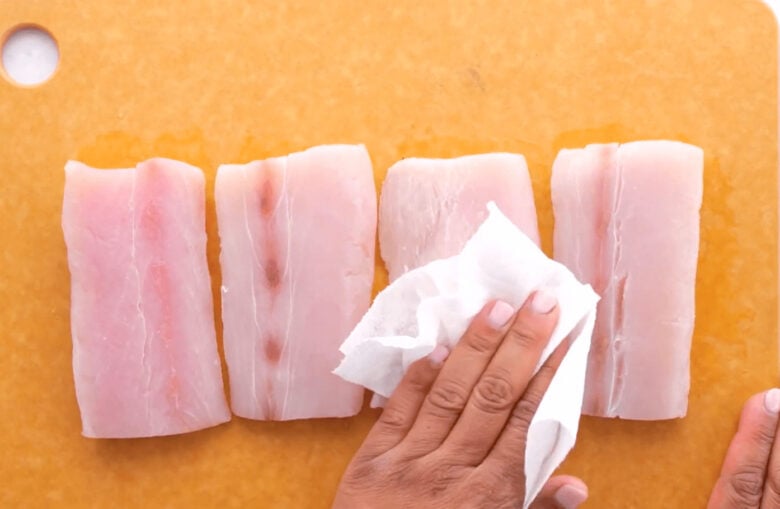
- Dry mahi fillets: Always pat dry excess moisture from the fish; this step is super important, as it affects how well your fish will brown. I use paper towels to fully pat away all extra moisture.
- Sizzling hot: Your cooking oil needs to be extremely hot before adding the fish. This allows for quick and even browning of the exterior.
- Don’t move it: Once fish is in pan, do not keep moving it around. Let it sit and brown for 3 minutes. It helps to have a large splatter guard. I use mine often whenever pan-frying foods.
- Cook time: Preheat the oven at least 15 minutes ahead of time, so it’s hot when you transfer the mahi mahi directly from the stovetop to the oven. After 5 minutes in the oven, it’s done.
- Prep Ahead: Make the lemon butter sauce up to 24 hours ahead of time, chill, and reheat when ready to use.
Step-by-Step Recipe Instructions
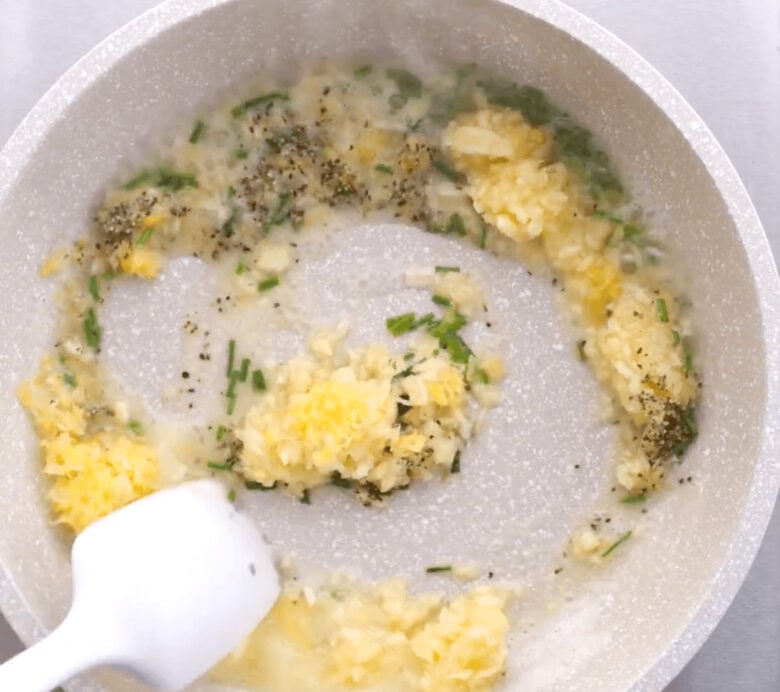
- Preheat the oven and put the rack in the middle position. Make the Lemon Garlic Mixture in a small pan. Set aside.
- Pat dry the excess moisture from the mahi mahi fillets with clean paper towels – an important step – do not skip.
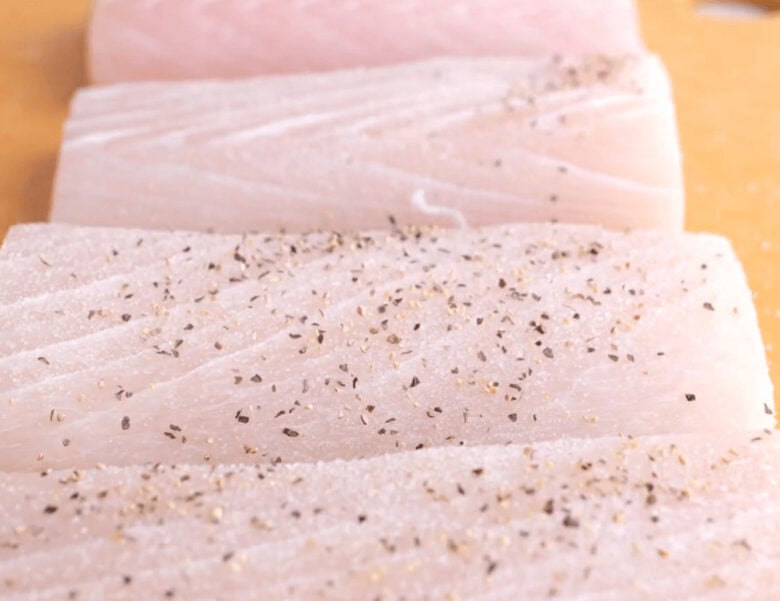
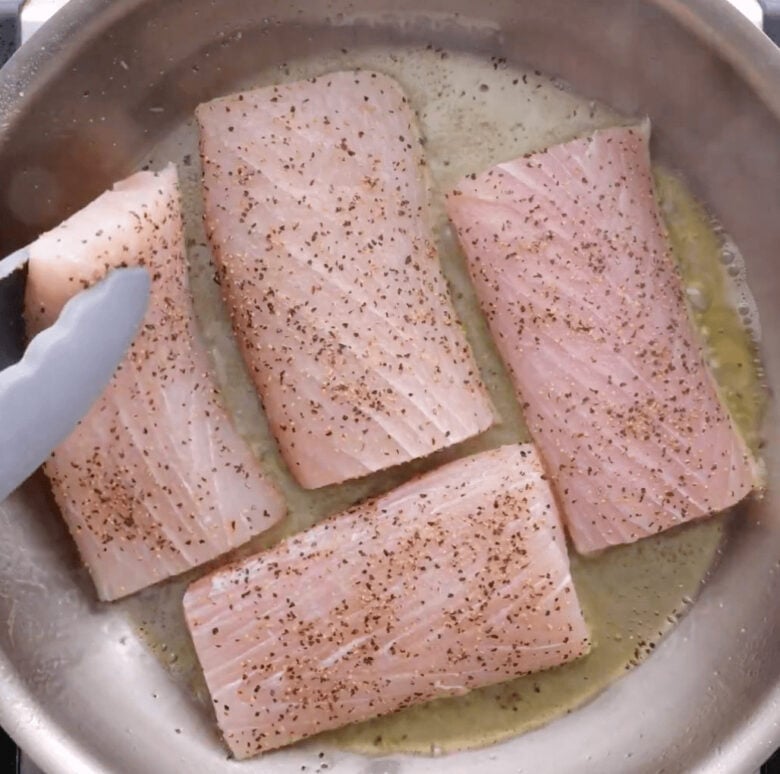
- Sprinkle both sides of the fillets with salt and black pepper. Set aside.
- Heat olive oil in a large pan over high heat. Cook the fish fillets until browned on one side, then flip.
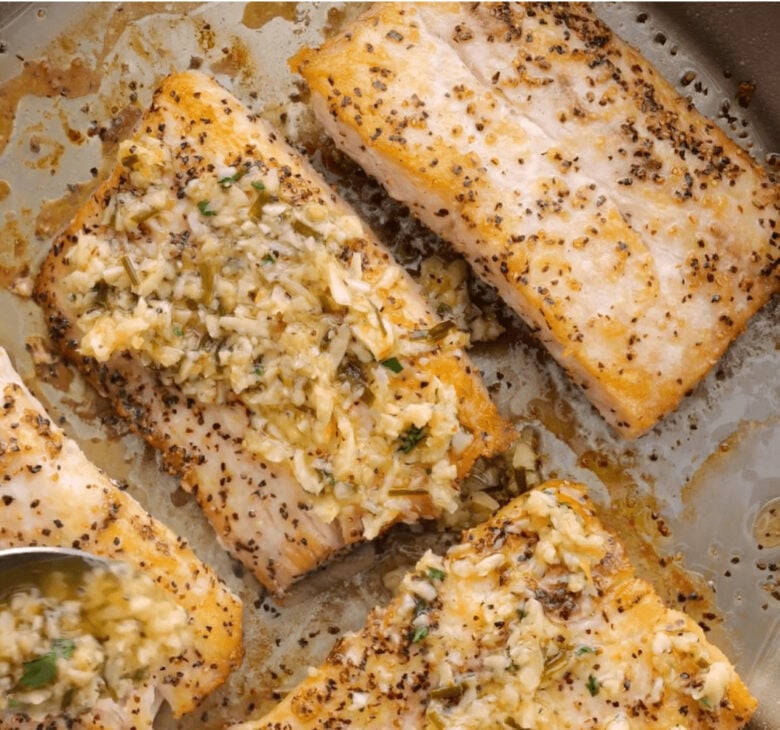
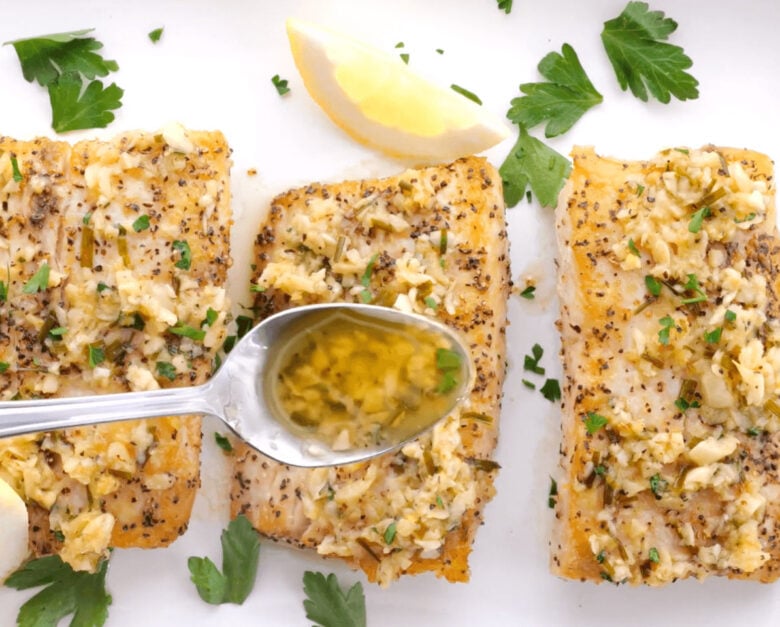
- Heat up the lemon garlic butter until melted and bubbly.
- Turn off the heat and pour over the cooked fish.
For full list of ingredients and instructions, see recipe card below.
How to Store Leftovers
- Reheat: Reheat gently in a skillet over low heat with a bit of olive oil or butter so it doesn’t dry out. Avoid the microwave if you can.
- Fish Tacos: Flake cold leftover mahi mahi into warm tortillas with cabbage slaw and lime juice for an effortless lunch.
- Storage: Store leftovers in an airtight container in the fridge for up to 2 days. Reheat thoroughly and add more sauce if needed.
Watch Us Make This Recipe
Easy Perfect Mahi Mahi Recipe
Ingredients
For the Lemon Butter Sauce
- 2 tablespoons salted butter, softened to room temp
- 2 tablespoons minced garlic
- 1 tablespoons chives or parsley, freshly chopped
- ⅛ teaspoons kosher salt, not table salt
- ¼ teaspoons freshly ground black pepper
- 1 tablespoons juice from fresh lemon
- 1 tablespoons grated lemon peel
For the Mahi Mahi
- 2 tablespoons olive oil
- 4 fillets mahi mahi, 1-inch thick, 4oz each
- kosher salt and freshly ground black pepper, to taste
Instructions
- Preheat oven to 400F with rack on middle position.
- Lemon Garlic Mixture (can be made ahead) – in a small pan, combine all Lemon Garlic Mixture ingredients and stir to fully combine. Set aside.
- Pat-dry all excess moisture from the fish fillets with paper towels. This step is important, so be sure to pat off as much moisture as you can.
- Evenly sprinkle both sides of fillets with pinches of kosher salt and freshly ground black pepper. Set aside.
- In a large oven-proof pan, heat the olive oil over high heat. Once oil is sizzling hot add the fish fillets to pan and let cook until browned on one side, about 3 minutes – do not move fish around.
- Carefully flip fish fillets over to the other side, turn stove burner off, and immediately transfer pan into already-hot oven.
- Roast fish at 400F about 5 minutes or just until the top is golden and center is just cooked through. Take care not to overcook.
- A minute before fish is done cooking in oven, heat your small pan of prepared lemon-garlic mixture over medium high heat, constantly stirring, just until melted and bubbly.
- Immediately turn heat off and pour mixture over the cooked fish. Be sure to pour on any juices from the fish pan as well. Serve with extra lemon slices for garnish.
Equipment
Notes
- Be sure to use kosher salt (see why use kosher salt) and not fine table salt. Fine salt is much saltier than kosher salt in recipes.
- Lemon Butter Sauce can be made ahead of time and reheated to serve.
- A large splatter guard is helpful whenever pan frying. It really helps with random oil splatters.
- Storage: Store leftovers in an airtight container in the fridge for up to 2 days. Reheat thoroughly and add more sauce if it’s dry once heated.
- This recipe is part of our easy fish recipes collection.
- If you enjoyed this recipe, please come back and give it a rating. We ❤️ hearing from you!
Nutrition (per serving)
What to Serve With Mahi Mahi?
Vegetables
- Best Easy Roasted Vegetables: Carrots, broccoli, and zucchini roasted to perfection balance the rich garlic butter.
- Lemon Spinach Orzo Salad: Bright citrus flavors tie perfectly into the meal.
Potatoes & Grains
- Perfect Instant Pot Brown Rice: Soaks up every single drop of that delicious lemon garlic sauce!
- Garlic Roasted Potatoes with Lemon: Double down on garlic and lemon with crispy potatoes.
Frequently Asked Questions
Mahi mahi is cooked through at 137°F to 140°F internal temperature. At this point, it is moist, tender, and easily flakes with a fork. Cooking it to 145°F will make it firm, but be careful not to overshoot it!
You can test doneness by inserting a fork into the thickest part of the fillet and twisting slightly. If it flakes easily and looks opaque in the center, it’s ready to eat!
Oh yes, absolutely. Because mahi mahi is a lean fish, overcooking it will make it tough, dry, and rubbery fast. Pull it from the oven as soon as it hits 137°F–140°F.
Yes, frozen fillets will work just as well as fresh fillets. Be sure to fully thaw and drain the fish fillets prior to using. Additionally, always pat-dry excess moisture after draining.
Removing moisture from the raw fish fillets is an important step to ensuring you’ll get nicely browned fish. When excess moisture is present, the fish will steam rather than brown, and it will not hold seasonings nearly as well.
Dry white wines pair well with the flaky, delicate fish. We recommend sauvignon blanc, pinot grigio, or a dry rosé.
More to Cook and Eat
- Mahi Mahi with Mango Avocado Salsa – This pan seared mahi mahi with mango salsa is scrumptious all by itself, and tastes fabulous with the fish. Tender, flavorful, and flaky white fish can easily be accomplished!
- Easy Lemon Butter Fish in 20 Minutes – This Easy Lemon Butter Fish only takes 20 minutes and a handful of ingredients. It’s a delicious and nutritious white fish recipe.
- Fish with Black Bean Sauce – Fish with Black Bean Sauce is a popular menu offering at many Chinese restaurants. This dish is savory, flavorful, and perfect over a bed of rice.
- Beer Battered Fish – If you like your fish with a little bit of crisp, this is the recipe for you. So easy and delicious.