
Japchae Recipe
- By Amy Dong
- Updated Apr. 23, 2026
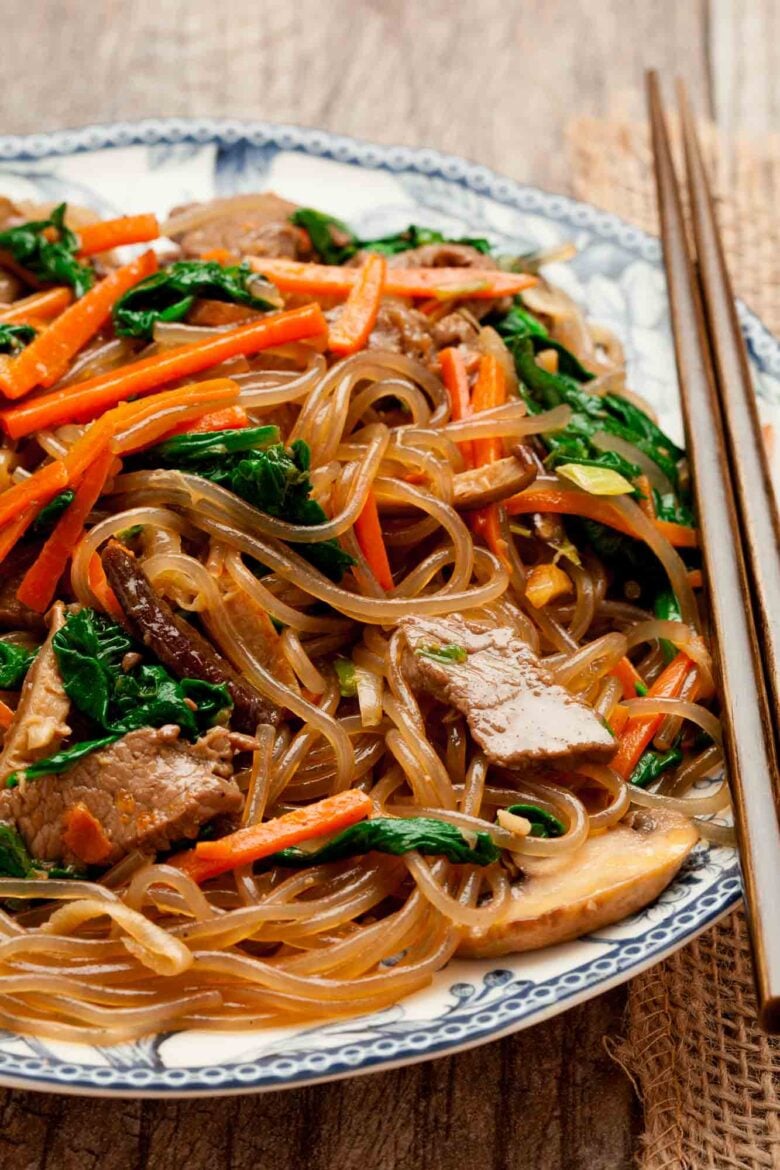
This Japchae recipe is one of my favorite Korean dishes to make at home. It’s way better than takeout. This Korean glass noodle stir fry is made with sweet potato starch noodles, which turns out deliciously tender, chewy, and soaks up the savory flavors. It’s easily the most popular dish on the table.
In This Article
This post may contain affiliate links, at no additional cost to you.
Amy’s Notes

This Japchae is one of my favorite healthy takeout recipes when I want an authentic Korean dish that’s way better at home. My husband and boys devour this dish. It’s also hugely popular when I serve it to friends. This dish has:
- Balanced Flavor: The sauce blends sweet, savory, and nutty notes with garlic, sesame, and soy, similar to these Pad See Ew (Thai Noodles).
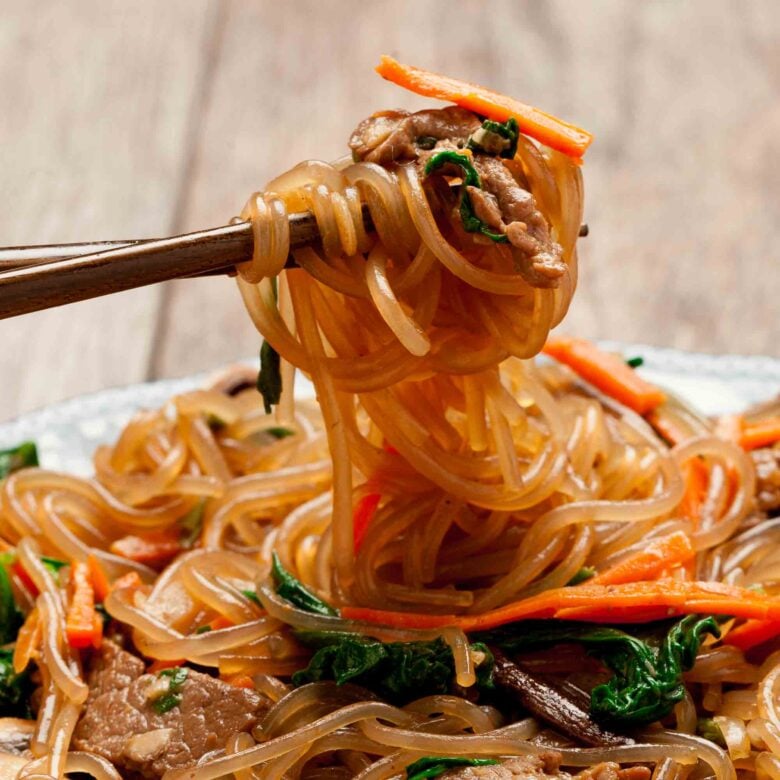
- Chewy, Glossy Noodles: Sweet potato noodles stay light and chewy while soaking up the sauce and keeping their signature glossy finish.
- Loaded with Veggies: Carrots, spinach, onions, and mushrooms make it hearty while still feeling fresh and vibrant.
- Tender, Savory Beef: Using tender cuts like ribeye keeps the beef juicy and flavorful, much like in these Mongolian Beef Noodles.
- Great for Any Occasion: It tastes just as good warm or at room temperature, making it perfect for gatherings or easy make-ahead meals.
Key Recipe Ingredients
- Beef (Filet Mignon or Boneless Ribeye) – Thinly sliced for tenderness and rich flavor. You can substitute with chicken, pork, or tofu for a different protein option.
- Granulated Sugar – Adds a touch of sweetness to balance the savory soy and sesame flavors. Brown sugar works just as well.
- Tamari Sauce – A gluten-free soy sauce that provides salty, umami depth. Regular soy sauce can be used if gluten isn’t an issue.
- Asian Toasted Sesame Oil – Adds nutty aroma and smooth richness. Look for the caramel-brown variety in the Asian section of your grocery store.
- Dried Shiitake Mushrooms – Soaked to soften, then sliced for a deep, earthy flavor. Use only the dried kind for the best taste.
- White Mushrooms – Add a lighter, juicy texture that complements the shiitake mushrooms.
- Baby Spinach – Quickly wilted for freshness and vibrant color. Prewashed spinach makes prep easier.
- Sweet Potato Starch Noodles (Dangmyeon) – The signature chewy noodles that define Japchae. Naturally gluten-free and made from pure sweet potato starch.
- Toasted Sesame Seeds – Sprinkled on top for a nutty crunch and classic finishing touch.
Substitutions And Variations
Here are some of our favorite substitutions and variations:
- Protein Options: I usually go with tender beef filet or ribeye, but chicken, pork, or shrimp work just as well. For a vegetarian version, I like using cooked tofu or simply skipping the meat altogether.
- Vegetable Add-Ins: You can toss in bell peppers, zucchini, or snap peas for extra crunch and color. I sometimes add bean sprouts or cabbage if I have them on hand.
Step-By-Step Recipe Instructions
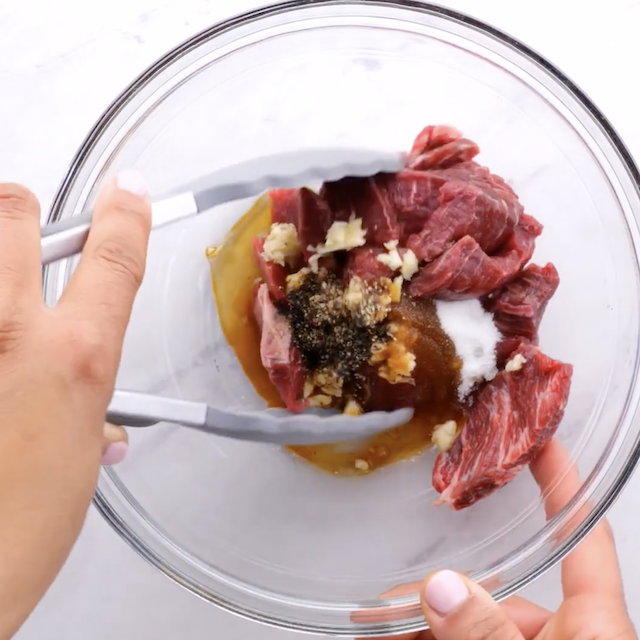
- Marinate beef with garlic, sugar, soy sauce, sesame oil, and pepper, then chill.
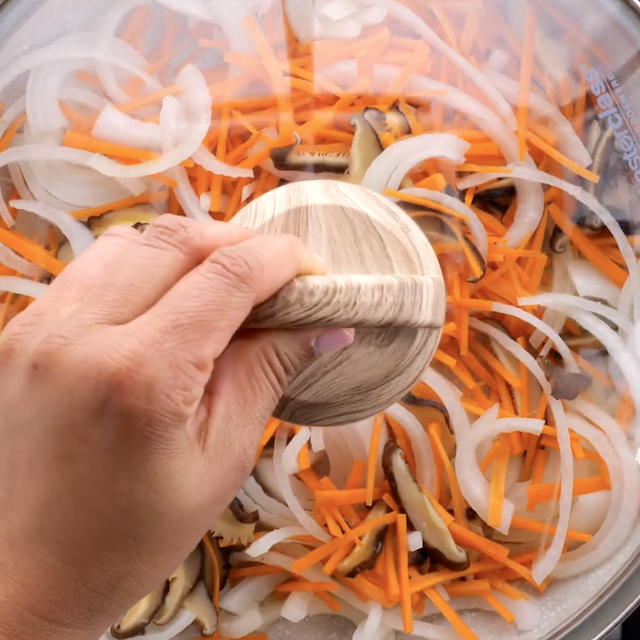
- Sauté onions, carrots, and mushrooms; cover and cook until tender.
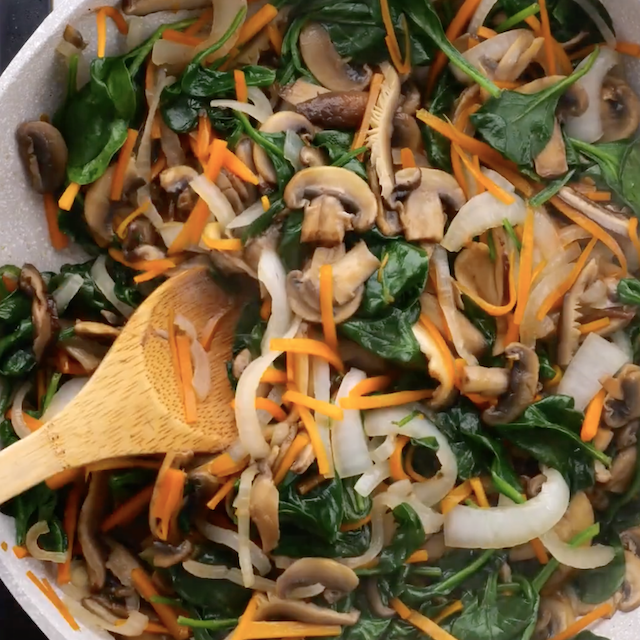
- Add spinach, cook until wilted, and set aside.
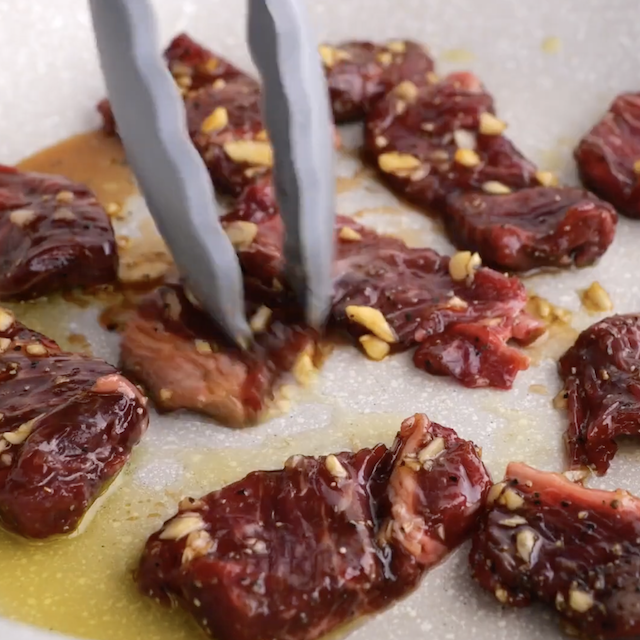
- Cook beef with green onions until no longer pink, and set aside.
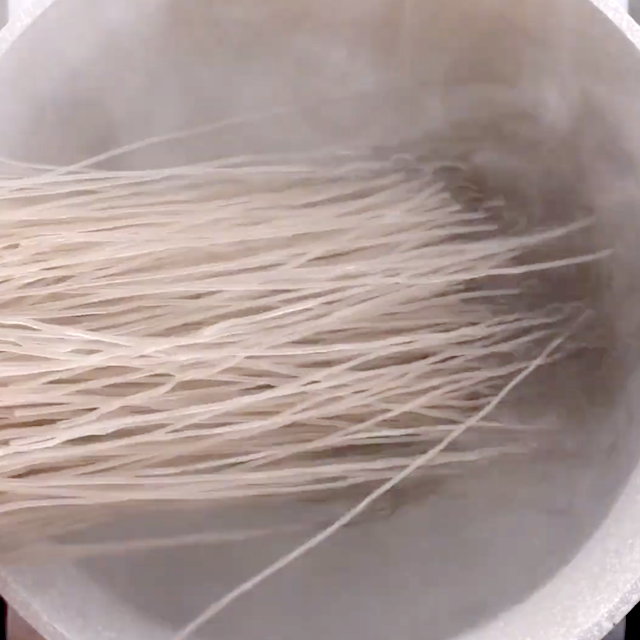
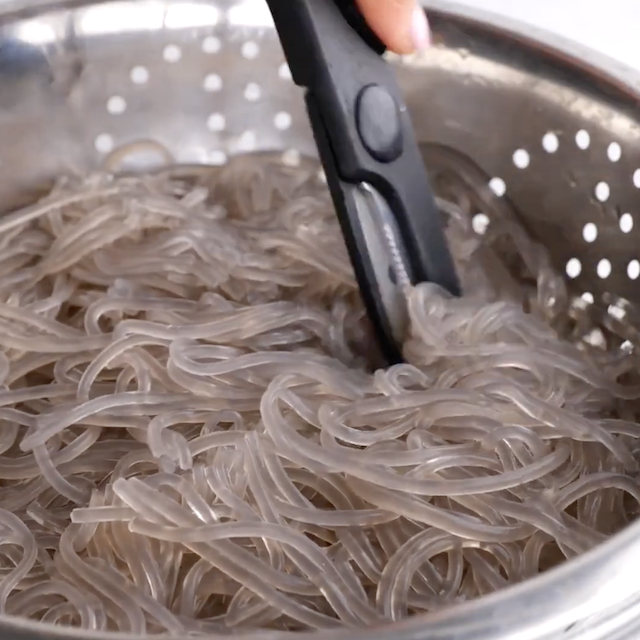
- Boil noodles until tender; drain and rinse.
- Cut noodles into shorter lengths.
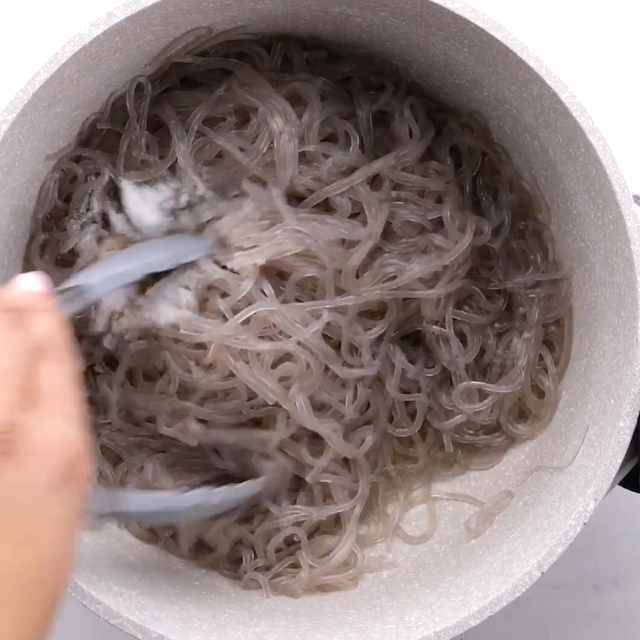
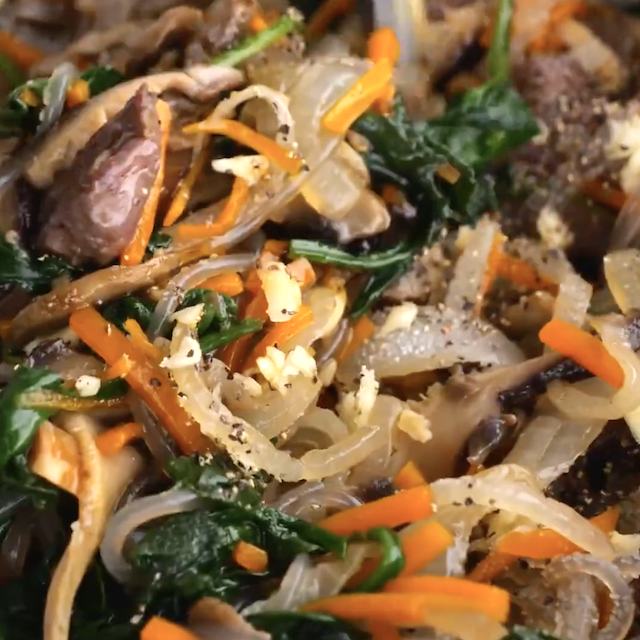
- Toss noodles with sugar, soy sauce, and sesame oil.
- Combine noodles with beef and veggies; toss and serve.
For full list of ingredients and instructions, see recipe card below.
How To Prep Ahead
Take a look at our best prep-ahead strategies for this recipe:
- Prep Ingredients in Advance: You can slice all the vegetables, soak and cut the shiitake mushrooms, and marinate the beef up to a day ahead. Keep everything covered in the fridge so it’s ready to cook when you are.
- Cook Noodles Early: Boil the sweet potato noodles, rinse, and toss them with a little sesame oil to prevent sticking. Store them in an airtight container in the fridge for up to a day.
- Make Entirely Ahead: Japchae tastes great at room temperature, so it’s perfect for prepping in advance. Cook everything, let it cool, and store it in the fridge for up to two days. Before serving, toss with a drizzle of sesame oil to refresh the noodles and bring back their shine.
Video: Watch Us Make This Recipe
Japchae Recipe
Ingredients
- 6 ounces beef, filet mignon or boneless ribeye recommended for tenderness cut into bite sized strips
- 4 cloves garlic, minced, divided
- 1 tablespoon plus 3 tsp granulated sugar, divided
- 4 tablespoons tamari sauce, divided
- 4 tablespoons Asian toasted sesame oil, divided (caramel brown in color; found in Asian aisles of grocery stores)
- olive oil for cooking
- 1 medium onion, thinly sliced
- 2 medium carrots, peeled and cut into matchsticks
- 4 large dried Shitake mushrooms, soaked in warm water 1-2 hours to soften, cut into thin strips
- 8 ounces white mushrooms, thinly sliced
- 8 ounces baby spinach leaves, bagged/prewashed is easiest
- 10 ounces sweet potato starch noodles, sometimes called sweet potato vermicelli or Dangmyeon
- 2 stalks green onion, ends removed, cut into bite size pieces
- table salt and freshly ground black pepper, to taste
- 2 tablespoons toasted sesame seeds for garnish
Instructions
- In a bowl, combine beef with half of the minced garlic, 1 tsp sugar, 2 tsp soy sauce, 1 tsp sesame oil, and 1/4 tsp ground black pepper. Stir to combine, cover, and chill in fridge.
- In a large nonstick pan, add 2 TB olive oil over medium heat. Once oil is hot, add onion, carrots, shitake mushrooms, and a pinch of salt (1/8 tsp.) Cover and stir over medium heat about 3 minutes or until onion is translucent.
- Add mushrooms and pinch of salt. Stir for 2 minutes or until mushrooms just turn soft. Add spinach and stir jut until wilted. Transfer mixture to a very large bowl, cover, and keep warm.
- Bring a large pot of salted water to boil.
- Meanwhile, in the same nonstick pan (now empty,) add 1 TB olive oil, beef, and green onions over medium heat. Stir until beef is no longer pink. Add beef mixture to the large bowl of veggies and cover.
- Place noodles into the large pot of boiling water, stirring often, 7-8 minutes or just until noodles are soft and chewy. Drain, rinse briefly with cold water, draining well.
- Using kitchen shears, make a few cuts through the noodles so they aren't as long. Place noodles back in empty pot. Add 3 tsp sugar, 2 tsp soy sauce, and 4 tsp sesame oil. Toss well to combine.
- Mix together the noodles and the beef/veggie mixture in large bowl or pot. Add remaining garlic, sugar, soy sauce, and sesame oil. Add salt/pepper to taste. Toss well by hand. Sprinkle on toasted sesame seeds and serve warm or at room temp.
Notes
- If noodles seem a bit sticky after tossing, feel free to add more sesame oil until noodles are loosened and glossy.
- Slice all vegetables evenly so they cook at the same rate and keep a nice texture.
- Soak dried shiitake mushrooms ahead of time for at least an hour to bring out their deep, earthy flavor.
- Don’t overcook the noodles; they should be soft yet chewy for the perfect Japchae texture.
- Rinse noodles briefly under cold water to stop the cooking and keep them from sticking.
- Serve Japchae warm or at room temperature – it’s delicious both ways.
- If making ahead, add a drizzle of sesame oil before serving to refresh the noodles and bring back their shine.
- This recipe is part of our Stir Fry Recipes Collection.
- It’s great served with some Asian appetizers such as Potstickers (Asian Dumplings) or Vietnamese Spring Rolls with Dipping Sauce.
Nutrition (per serving)
What To Serve with Japchae Recipe
Side Dishes
- Japchae pairs beautifully with fresh, crunchy sides. We like serving it with Crunchy Asian Cabbage Ramen Salad for a crisp contrast to the tender noodles.
- It’s also great next to Asian Pasta Salad with Sesame Ginger Dressing or a simple bowl of Sautéed Cabbage for something warm and comforting.
Appetizers
- For a full spread, start your meal with Potstickers (Asian Dumplings) or fresh Vietnamese Spring Rolls with Dipping Sauce.
- If you’re feeding a crowd, Sweet and Sour Meatballs or sticky Asian Chicken Wings make fun, flavorful additions that everyone loves.
Frequently Asked Questions
Use sweet potato starch noodles, also called Dangmyeon. They’re chewy, light, and naturally gluten-free. You can find them in the Asian section of most grocery stores or at Korean markets.
If noodles seem a bit sticky after tossing, feel free to add more sesame oil until noodles are loosened and glossy.
Japchae can be served warm, at room temperature, or even slightly chilled. It’s often enjoyed at parties and potlucks because it tastes great no matter the temperature.
Store leftovers in an airtight container in the fridge for up to 3–4 days. Reheat gently on the stove or in the microwave, adding a small drizzle of sesame oil to loosen the noodles and refresh the flavor.
To reheat Japchae, the best method is using a skillet over medium heat with a splash of water or sesame oil. This adds moisture back into the sweet potato starch noodles. You can also cover it airtight and reheat in the microwave.
More to Cook and Eat
- Cold Sesame Noodles – I serve cold sesame noodles when my family needs a quick and easy meal that’s refreshingly full of flavor. The sauce is rich, the noodles are satisfying, and it all comes together fast. Bonus: it has a nutty flavor while being nut-free.
- One-Pot Asian Pasta – This One-Pot Asian Pasta is quick, simple, and tastes fabulous. It’s healthy to boot! Delicious way to change things up on a busy weeknight.
- Peanut Noodles with Sesame Ginger Sauce – Peanut Sesame Noodles with Sriracha is a simple, super easy, yet hugely flavorful noodle dish. Can be fully made in advance.
- Peanut Soba Noodles with Chicken – I whip up these peanut soba noodles with chicken when I need a no-fuss meal that my whole family loves. The flavors are bold, the textures are crisp and creamy, and it takes just minutes to put together.